

Material Selection: The Decisions That Shape Every Textile Product
Discover why material selection is one of the most important decisions in textile development and how fibres, constructions and finishes influence quality, durability and long-term performance.
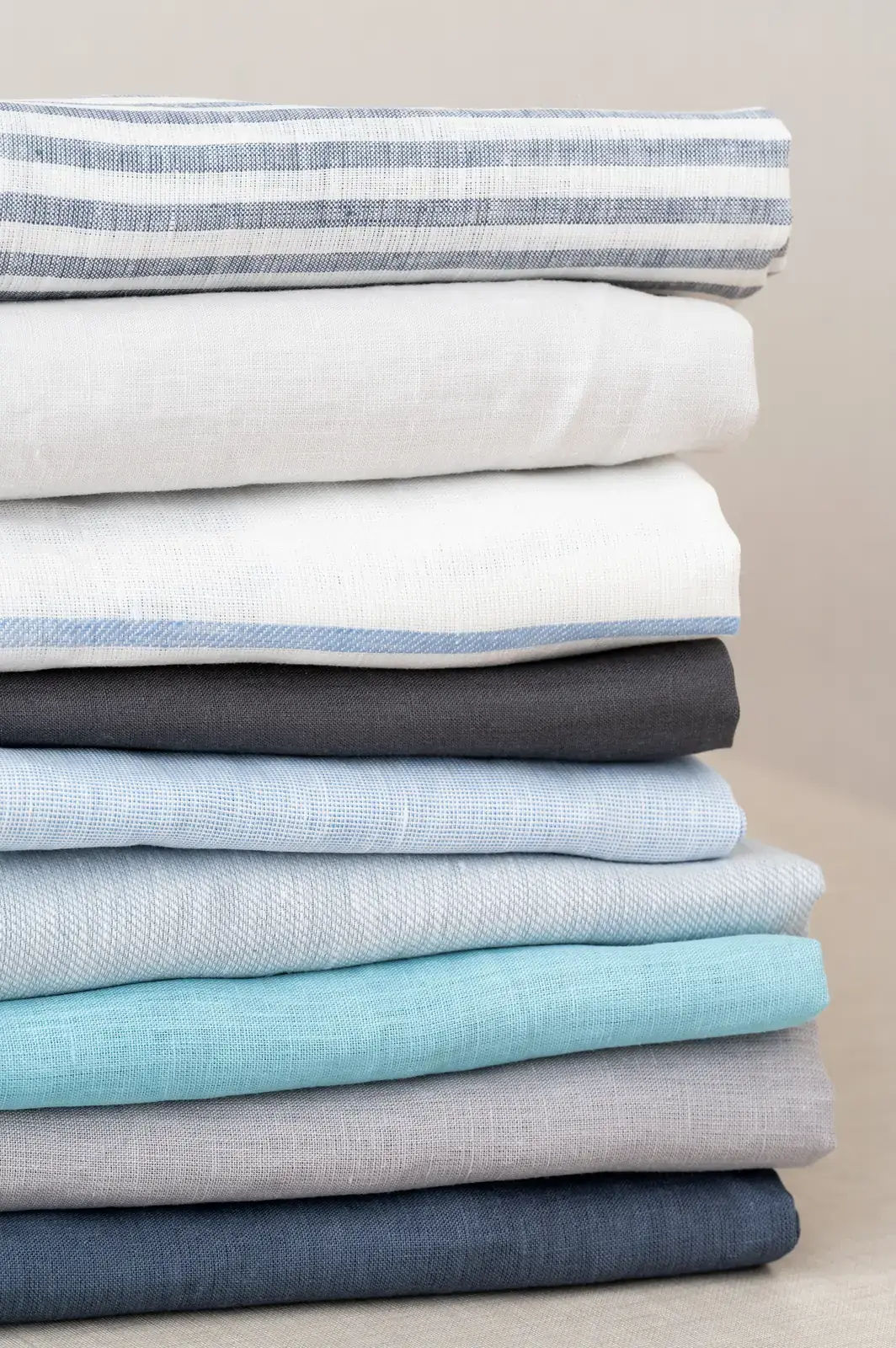
When a new textile project reaches the development stage, one of the first questions is usually straightforward: "What is the best fabric for this product?" At first glance, it seems like a technical question. In reality, it is a strategic one.
The answer is never determined by fibre composition alone. It depends on the environment in which the product will be used, the experience it is expected to create, the way it will be manufactured, how frequently it will be used and laundered, and ultimately the expectations of the brand that will introduce it to the market. This is precisely why material selection is one of the most influential decisions in the entire product development process. Long before production begins, materials are already defining what a product will be capable of delivering.
There is no perfect material — only the right material
Textile specifications often begin and end with composition: 100% cotton, 100% linen, a cotton-linen blend, organic cotton, TENCEL™. At first sight these descriptions appear comprehensive. In reality, they reveal very little.
Two fabrics manufactured from exactly the same fibre composition may behave in completely different ways. They may differ in weight, in softness, in durability, in moisture management, in visual appearance, in production efficiency — even in long-term performance after repeated industrial laundering.
Why? Because materials never exist in isolation. Every textile is the result of multiple technical decisions working together: the fibre, the yarn, the weave, the density, the finishing, the manufacturing process. It is the interaction between these variables that determines how a textile performs throughout its life. Understanding that interaction is what transforms material selection from a purchasing decision into an engineering decision.
Fibre is only the beginning
There is a common misconception that choosing a premium fibre automatically guarantees a premium product. Experience consistently proves otherwise.
Cotton provides one of the clearest examples. Not all cotton fibres behave in the same way. Fibre length affects yarn strength. Uniformity influences surface appearance. Origin contributes to natural characteristics. Spinning techniques alter softness and durability. Finishing processes can completely transform the final perception of the product. The same principle applies to linen, regenerated fibres and innovative material blends.
The fibre provides potential. Engineering determines performance. That is why development begins long before colours, patterns or packaging are discussed. It begins with understanding the behaviour of the material itself.
Different markets demand different decisions
One of the most common mistakes in textile development is assuming that a successful fabric can successfully serve every application. In practice, every market presents its own technical challenges.
Hospitality products require dimensional stability, excellent laundering performance and long-term consistency despite intensive daily use. Luxury residential collections often prioritise tactile comfort, elegant drape and refined visual appearance. Retail collections demand a careful balance between performance, cost competitiveness and speed of development. Private label projects require materials capable of expressing the identity of a specific brand while remaining technically reliable throughout production.
The right material changes according to the objective — not because one fibre is better than another, but because each product has a different purpose. Successful material selection is therefore never about finding the most expensive solution. It is about finding the most appropriate one.
Engineering creates confidence
Material selection has evolved far beyond choosing fibres from a catalogue. Today it requires technical knowledge, manufacturing experience and the ability to anticipate how products will behave throughout their entire lifecycle.
Questions that appear simple often become the most valuable. How will the fabric behave after fifty industrial washing cycles? Which finishing process will preserve softness without compromising durability? Which weave will provide the required performance while remaining commercially viable? Can this solution be manufactured consistently at industrial scale?
Answering these questions before production begins dramatically reduces uncertainty. Every correct decision removes future risk. Every avoided risk reduces unnecessary costs. Every informed decision creates greater value. This is where textile engineering becomes commercially important.
Development is about exploring possibilities
There is another misconception that still exists across many industries: the belief that manufacturers become involved only after receiving a technical specification. The strongest projects rarely work that way.
Instead, they begin with conversation. Ideas are explored. Assumptions are challenged. Alternatives are evaluated. Technical expertise becomes part of the creative process rather than a response to it. Sometimes this leads to improved performance without increasing costs. Sometimes it reduces manufacturing complexity. Sometimes it introduces more responsible material alternatives. Sometimes it simply produces a better product.
Development should never be viewed as a sequence of approvals. It is a collaborative process of discovering better solutions.
Beyond fabric selection
At RIFER, selecting materials is ultimately about understanding people. How the product will be used. How it should age. What experience it should deliver. What expectations it must fulfil. Every technical recommendation begins with these questions. Only afterwards do fibres, constructions, finishes and manufacturing methods enter the conversation.
Because selecting a material is not the objective. Creating the right product is. Materials simply provide the foundation upon which that product is built.
Conclusion
The best textile products are rarely defined by one extraordinary decision. They are the result of hundreds of intelligent decisions made consistently throughout development. Material selection is among the first — and it remains one of the most influential.
When approached with technical expertise, industrial understanding and a collaborative mindset, it becomes far more than a specification. It becomes the foundation upon which quality, reliability and long-term value are built.