

Why the Best Textile Products Are Developed Before They Are Manufactured
Discover why product development is the true foundation of successful textile manufacturing and how better decisions create better products, greater efficiency and lasting value.
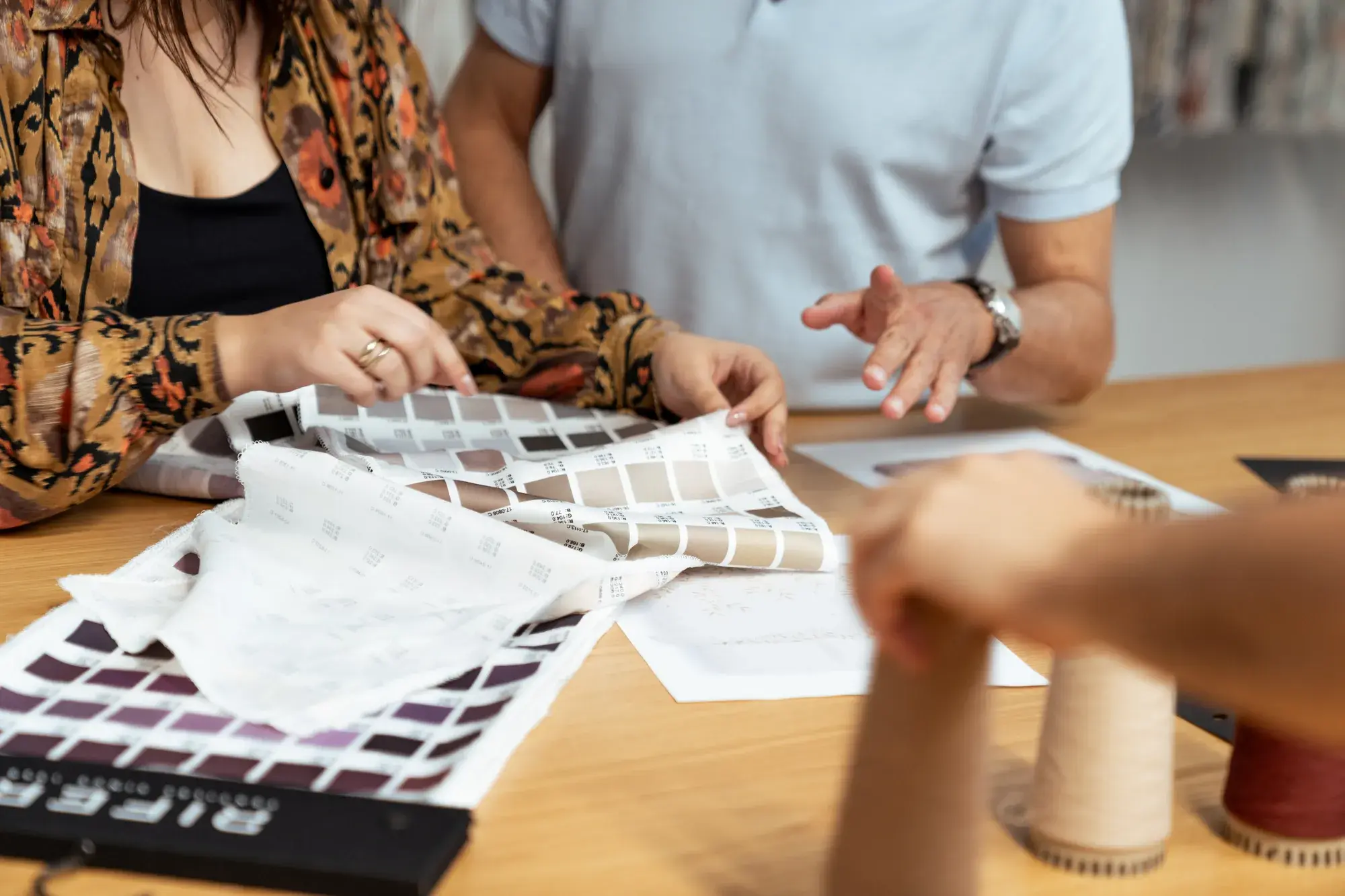
There is a belief that has shaped the textile industry for decades. When people think about quality, they instinctively think about manufacturing — machinery, production capacity, efficiency, automation, quality control. All of these elements are essential. Yet none of them is responsible for transforming a good idea into an exceptional product.
By the time the first metre of fabric reaches the production floor, most of the decisions that will define its success have already been made. This is why the true value of a manufacturing partner does not begin with production. It begins much earlier. It begins with development.
Where every important decision is made
Every textile project starts with a brief. At first glance, it appears to be a simple document: a collection of specifications, a sketch, a reference, a composition, a deadline. In reality, it marks the beginning of hundreds of interconnected decisions that will determine whether the final product succeeds or fails.
Before any machine starts operating, critical questions need to be answered. What experience should this product create? Who will use it, and under which conditions? How should it perform after years of continuous use? What balance should exist between comfort, durability, aesthetics, cost and manufacturing efficiency? None of these answers emerge during production. They are established during development — and they influence every stage that follows.
Manufacturing is not development
Over the past decades, textile manufacturing has become remarkably efficient. Technology has advanced, machinery has become increasingly precise, and production processes are more controlled than ever before. Manufacturing excellence is no longer a competitive advantage on its own. Developing the right product is.
Production is about execution. Development is about decision-making. During development, teams define materials, constructions, finishes and technical solutions. They anticipate risks before they occur, identify opportunities for improvement, optimise costs without sacrificing performance, and transform concepts into products that can be manufactured consistently and successfully. When these decisions are made correctly, production becomes predictable. When they are not, even the most advanced manufacturing technology cannot compensate.
Every decision shapes the next
A textile product is never defined by a single choice. It is the result of hundreds of decisions connected to one another. The fibre influences the yarn. The yarn influences the weave. The weave influences the finish. The finish influences the hand feel. The hand feel influences customer perception — and customer perception influences brand value. Everything is connected.
Changing one variable often affects several others. Improving softness may influence durability. Reducing weight may affect stability. Introducing a new finish may change manufacturing efficiency. Product development is the discipline of understanding these relationships before production begins. It is about finding balance rather than perfection.
Collaboration creates better products
One of the most significant differences between a supplier and a development partner lies in the way they engage with projects. A supplier receives specifications. A development partner helps define them.
When designers, technical teams, manufacturers and brands work together from the earliest stages, better decisions become possible. Risks decrease, communication improves, sampling becomes more efficient, and the final product aligns more closely with the original vision. Development is not only about solving problems. It is about preventing them from happening in the first place.
Thinking beyond manufacturing
Developing a textile product means looking beyond the moment it leaves the production line. How will it behave after repeated laundering? How will it age? Will it maintain its appearance? Can it be reproduced consistently over time? These are development questions, not manufacturing questions. The answers determine whether a product remains relevant years after its launch. Consistency is never accidental. It is designed.
Development reduces uncertainty
Every new project introduces uncertainty: new fibres, new constructions, new market expectations, new sustainability requirements, new commercial objectives. The purpose of product development is not to eliminate complexity. It is to transform complexity into informed decisions.
Every prototype, every laboratory test, every technical discussion, every adjustment and every approval removes uncertainty before industrial production begins. The better this preparation becomes, the more reliable the final outcome will be. This is where development generates its greatest value.
The future of textile manufacturing starts before the factory
As markets become increasingly demanding, development is no longer a technical stage hidden behind production. It has become one of the industry's strongest competitive advantages. Companies capable of understanding materials, anticipating customer needs and integrating technical knowledge into every project will always be better positioned to create meaningful products — not because they manufacture more, but because they develop better.
Conclusion
The best textile products never begin on the production floor. They begin with curiosity, with questions, with technical understanding and informed decisions. When development is treated as a strategic investment rather than a preliminary formality, manufacturing becomes more efficient, quality becomes more consistent and products become significantly more valuable.
At RIFER, this philosophy guides every project. Because manufacturing excellence is essential — but product development remains the decision that shapes everything that follows.